
| Key Takeaways • A kapia pepper is a sweet, thin-walled, elongated pepper prized for tender flesh and concentrated sweetness rather than crunch. • The variety traces to Bulgaria’s Kurtovo Konare region, where the Kurtovska Kapia strain was developed starting in the late 1800s and later refined by a regional research institute. • Breeders have adapted the traditional thin-walled sweetness into smaller, seedless, snack-format peppers designed for grab-and-go eating. • Search interest in kapia-related pepper queries has stayed high through mid-2026, with impressions climbing even as the query held a top-3 average position. |
What is a kapia pepper?
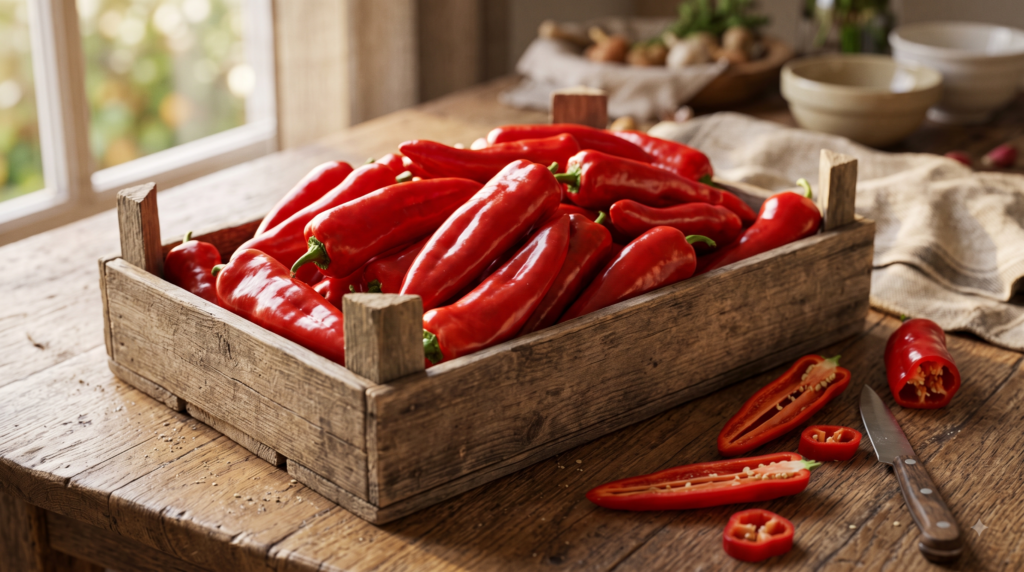
A kapia pepper is a sweet, elongated, thin-walled pepper variety traditionally shaped like a flattened, three-sided cone rather than the boxy shoulders of a bell pepper. The thin flesh and low moisture content give kapia types a tender bite and a concentrated, sweet flavor that holds up whether the pepper is eaten fresh, roasted, or preserved. Breeders have since adapted the traditional shape into smaller, seedless mini-kapia pepper varieties built for snacking rather than cooking, keeping the same sweetness and thin wall in a size that needs no cutting board.
Where did the kapia pepper originate?
The kapia pepper traces back to Bulgaria, where the best-documented strain, Kurtovska Kapia, was developed in the Kurtovo Konare region of the Thracian Valley starting in the late 1800s. According to Slow Food’s Ark of Taste catalog, the variety was bred through hybridization by a local grower and later refined by Bulgaria’s Maritsa Vegetable Crops Research Institute in Plovdiv. Traditional fruits run 12 to 15 centimeters long and average 75 to 80 grams, with a three-angled, flattened shape and two long grooves running down the length of the pod, ripening from dark green to dark red over a 140 to 150 day cycle. That regional legacy is still why the name “kapia” signals sweetness and thin flesh to shoppers and chefs, decades before the term reached international produce aisles.
How does a kapia pepper differ from a bell pepper or a blocky pepper?
The main difference is wall thickness and shape: bell and blocky peppers are bred for thick, crisp walls and a boxy four-lobed shape, while kapia types are bred thin-walled and tapered for sweetness and a softer bite. That thinner wall also means kapia peppers cook down faster and roast more evenly, which is part of why the shape became a staple for roasting and preserving in its region of origin. Snack-format breeding has carried the same thin-wall, high-sweetness profile into smaller pods, positioning kapia-derived varieties alongside other sweet pepper types bred primarily for out-of-hand eating rather than cooking.
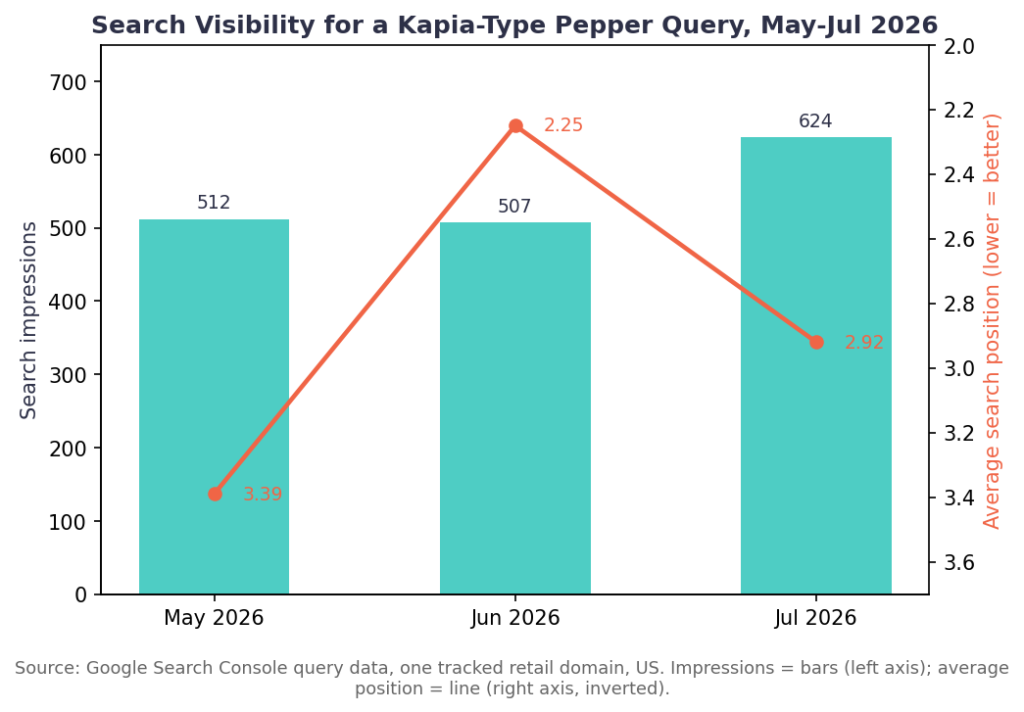
Search impressions and average position for a kapia-pepper query, May to July 2026 — impressions climbed while the query held a top-3 average position. Source: Google Search Console, one tracked retail domain, US.
Why are seedless, snack-sized kapia formats gaining shelf space?
Snack-sized, seedless kapia formats are gaining shelf space because they combine two things retailers look for at once: a distinct, sweeter flavor profile than a standard mini pepper, and zero prep work for the shopper. Removing the seed cavity eliminates the one step (deseeding) that keeps most sweet peppers out of grab-and-go snack trays, while the thin kapia wall keeps the bite tender rather than crunchy-tough. one recent look at kapia peppers’ retail rise ties this shift to broader demand for produce that requires no washing, cutting, or seeding before it reaches a lunchbox or snack bowl. Search interest reflects the same pull: kapia-related queries have consistently posted some of the highest impression volumes among pepper-variety searches this year, evidence that shoppers are actively looking up the type by name rather than just browsing the produce aisle.
How can shoppers identify a genuine kapia pepper at the store?
A genuine kapia pepper is easiest to identify by shape and weight: look for an elongated, tapered pod with a flattened, faintly three-sided cross-section rather than the rounded four-lobe shoulders of a bell pepper. Because the wall is thin, a kapia pepper feels noticeably lighter for its length than a blocky pepper of similar size, and the skin often shows the two shallow longitudinal grooves that run the length of the traditional shape. Color is a ripeness cue rather than a variety cue: kapia types typically start dark green and ripen through orange to a deep red, and the sweetest fruit is usually the one furthest along that color change rather than the earliest-picked green pod. Modern seedless and yellow or orange kapia-derived varieties complicate that color cue slightly, since a fully ripe yellow pod can be just as sweet as a fully ripe red one, which is why shape and wall thickness remain more reliable identifiers than color alone once a shopper is choosing between multiple kapia-style colors side by side.
Why does genetic purity matter for kapia pepper seed production?
Genetic purity matters because a kapia pepper’s entire commercial value rests on a narrow set of inherited traits, thin walls, sweetness, and the characteristic elongated shape, and cross-pollination with other pepper types in the same field can quietly erode all three over successive seasons. Documentation on the traditional Bulgarian strain specifically flags this risk: co-cultivation with other pepper varieties nearby has been identified as a threat to maintaining a genetically pure kapia line over time. That’s part of why serious seed production for kapia-derived varieties, including modern seedless and snack-format lines, relies on isolated growing blocks and controlled pollination rather than open-field seed saving, to keep the defining thin-wall, high-sweetness profile consistent from one generation of seed to the next.
What should growers and buyers look for in a kapia pepper variety?
Growers and buyers evaluating a kapia variety should prioritize wall thickness, sweetness consistency, and color hold through ripening, since those three traits are what separate a true kapia-type from a generic sweet pepper marketed under the name. Climate adaptation matters just as much commercially: some kapia-derived lines are bred for spring and summer greenhouse cycles, while others are selected specifically to hold performance in winter or cooler-climate production windows. For growers scaling snack-format production, a broader range of snacking pepper varieties shows how kapia-style sweetness and thin walls have been carried into other bite-sized formats alongside the traditional shape.
How does the kapia pepper fit into a wider seedless produce category?
The kapia pepper fits into a wider seedless produce category as one entry point among several snack-shaped, seed-free pepper types now competing for the same lunchbox and grab-and-go shelf space. Retailers merchandising this category typically group kapia-style, mini-blocky, and long-conical seedless formats together under a single “snacking peppers” label rather than splitting them by traditional variety name, since the shared selling point (sweetness, no seeds, no prep) matters more to shoppers than the shape. a wider seedless produce lineup reflects how breeding programs are extending that seedless, snack-ready approach across pepper shapes beyond the original kapia form.
Frequently Asked Questions
What does the word kapia mean in relation to peppers?
Kapia refers to a sweet, thin-walled, elongated pepper shape that originated in Bulgaria, historically prized for its concentrated sweetness and tender flesh compared to thicker-walled bell or blocky peppers.
Are kapia peppers spicy?
No, kapia peppers are a sweet pepper variety with no significant heat; their appeal is sweetness and thin, tender flesh rather than any capsaicin content.
Can kapia peppers be eaten raw?
Yes, kapia peppers can be eaten raw and are increasingly bred into seedless, snack-sized formats specifically for raw, out-of-hand eating.
How is a mini-kapia pepper different from a traditional kapia pepper?
A mini-kapia pepper keeps the same thin-walled sweetness of the traditional kapia shape but is bred smaller and seedless, sized for snacking rather than for cooking or roasting whole.
