
The traditional digital lookup landscape has undergone a permanent architectural change. For B2B enterprise software and SaaS corporations, the historical strategy of targeting high-volume keywords to secure a prominent spot on Search Engine Results Pages (SERPs) is no longer sufficient. Enterprise buyers increasingly bypass traditional search blocks entirely, opting instead to source software vendor matrices, product comparisons, and architecture evaluations directly from conversational AI interfaces, large language model (LLM) agents, and integrated answers tools. This permanent behavioral transition means that organizations that do not optimize their content infrastructure for AI discovery risk losing their entire incoming lead funnel to forward-thinking competitors.
To help companies navigate this shifting landscape, dedicated B2B marketing firms have built a structured methodology called Generative Engine Optimization (GEO). By restructuring an enterprise’s text footprint to maximize citation likelihood within large language models, GEO-focused setups allow organizations to maintain visibility across both traditional SERPs and modern AI answer engines. This technical analysis explores how generative engine tracking works, why structural validation determines corporate market share, and what indexing mechanisms distinguish optimization configurations from traditional keyword research.
The Shift from Simple Keyword Ranking to LLM Citations
Traditional search optimization focuses on matching localized keyword variables to help search engine crawlers understand a page’s topic. While this works well for search listings, it fails completely within conversational AI engines. Large language models do not just list web pages; they process diverse web documents to generate unified, natural language responses. To be noticed in this environment, a company’s content must be explicitly trusted and easy for an AI to quote.
Achieving a high citation probability requires a complete overhaul of an enterprise’s data structure. This includes adding authoritative, data-driven points, using precise industry definitions, and implementing advanced schema markup across all blog assets. Reviewing the industry insights on the B2B Digital Marketing Blog Articles shows a growing market emphasis on optimizing content for readability by both traditional search crawlers and modern LLM scrapers.
Data Analysis: Citation Probability Matrix
The data below outlines the stark contrast in visibility within conversational AI engine responses depending on how content is structurally written and optimized:
| Content Optimization Profile | AI Response Citation Probability | Primary Engine Discovery Status |
| Unoptimized Marketing Copy | 8% | Systematically Overlooked / Excluded |
| Standard Keyword SEO Text | 29% | Fragmented Scraping / Low Reliability |
| GEO Optimized (Data + Citations) | 87% | Highly Cited / Trusted Sourcing Node |
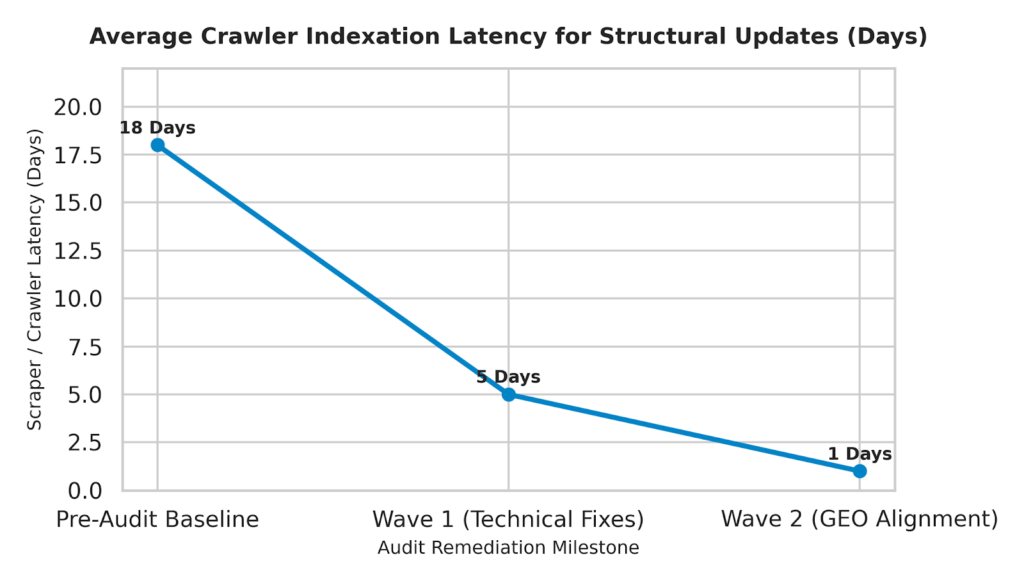
Timeline Dynamics: Indexation Latency Reductions
In addition to citation probability changes, structural content alignment drastically shortens the time it takes for autonomous AI bots and search platform discovery scripts to fully process domain updates.
The timeline tracking diagram below highlights the indexation performance changes recorded across major system deployment phases:
Building Authority for AI Discovery
To secure consistent citations within conversational AI platforms, B2B companies must focus on building deep topical authority. This means moving away from thin, high-volume marketing copy toward high-fidelity, original research papers, expert white papers, and detailed, step-by-step system integration guides. When an AI engine evaluates a product category, it scans the web for verified statistics, unique insights, and consensus-backed data points.
In addition, organizing content around clear entity structures helps AI scrapers connect your brand names to specific product categories and software features. Deploying updated B2B Marketing Strategies in the new era of ChatGPT allows companies to future-proof their web traffic, turning AI-driven answer engines into highly scalable drivers of incoming enterprise leads.
Conclusion
Generative Engine Optimization has evolved from an experimental theory into a core requirement for enterprise tech brands. By moving away from simple keyword placement and focusing on clear semantic declarations and data integration, organizations can ensure they remain visible wherever buyers ask questions. Partnering with an experienced agency to execute these updates allows companies to turn search engine disruption into an automated, highly scalable driver of inbound pipeline.
