
In today’s fast-paced digital world, professional live streaming equipment is essential for delivering high-quality broadcasts that captivate audiences. Whether you’re covering breaking news, hosting virtual events, or providing sports broadcast solutions, the right live streaming equipment ensures seamless transmission and engaging viewer experiences. As we look toward 2026, advancements in technology are reshaping broadcast workflows, making it crucial to invest in gear that supports reliability, scalability, and innovation.
Here are some key issues to consider when evaluating professional live streaming equipment:
- Reliability in Connectivity: Unstable internet can ruin a live stream, so equipment with bonding technology is vital.
- Video Quality Standards: 4K and beyond are becoming the norm for professional broadcasts.
- Integration with Workflows: Seamless compatibility with cloud platforms and AI tools streamlines production.
- Cost-Effectiveness: Balancing high-end features with budget-friendly options for various scales.
Defining Professional Live Streaming Equipment
Professional live streaming equipment goes beyond basic setups like smartphones and free software. It includes specialized hardware and software designed for broadcast-grade performance, ensuring low latency and high resolution. For instance, in sports broadcast solutions, this equipment handles multi-camera feeds without glitches.
This level of gear is tailored for demanding environments, from remote locations to studio productions. It prioritizes durability and ease of use, allowing creators to focus on content rather than technical issues. As 2026 approaches, expect more emphasis on AI-driven features that automate aspects of the workflow.
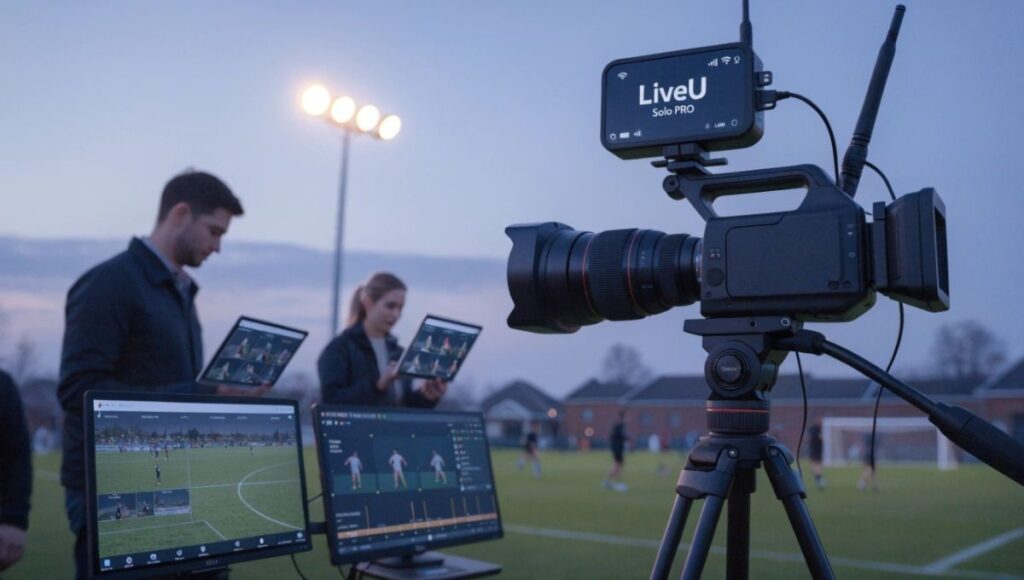
Essential Components of Live Streaming Equipment
A core piece of professional live streaming equipment is a high-quality video camera capable of 4K or higher resolution. These cameras capture crisp footage, essential for immersive viewer experiences in live events. Paired with encoders, they compress and transmit video efficiently over various networks.
Encoders are the backbone of live streaming equipment, converting raw video into streamable formats. They support multiple inputs and outputs, making them ideal for complex setups like sports broadcast solutions. Additionally, audio gear such as microphones and mixers ensures clear sound, rounding out a professional kit.
Switchers and production software allow real-time editing and graphics overlays. These tools integrate seamlessly in modern workflows, enabling quick switches between camera angles. For 2026, look for components that support remote production to reduce on-site crews.
Key Features Shaping 2026 Broadcast Workflows
By 2026, professional live streaming equipment will heavily incorporate AI for personalization and automation. Features like real-time analytics will optimize streams based on viewer preferences, enhancing engagement. This is particularly useful in sports broadcast solutions, where dynamic highlights can be generated automatically.
Low-latency transmission via 5G and bonding technology will be standard in live streaming equipment. It ensures uninterrupted broadcasts even in challenging environments, like crowded stadiums. Cloud integration will allow scalable workflows, letting teams collaborate remotely without compromising quality.
Sustainability features, such as energy-efficient hardware, are emerging as priorities. These innovations reduce the environmental impact of broadcasts while maintaining performance. Overall, 2026 workflows will focus on flexibility, making professional live streaming equipment more accessible to smaller operations.
Sports Broadcast Solutions: Leveraging Advanced Live Streaming Equipment
In the realm of sports, professional live streaming equipment transforms how games are delivered to fans worldwide. Sports broadcast solutions often include wireless encoders and PTZ cameras for capturing action from multiple angles. This setup provides viewers with immersive experiences, from field-side views to instant replays.
Reliable connectivity is a game-changer in live streaming equipment for sports. It handles high-bandwidth demands during peak events, ensuring no dropped frames. As 2026 nears, AI-enhanced features will offer personalized streams, like stats overlays tailored to individual preferences.
Cost savings are another benefit, as remote production cuts travel expenses. Teams can produce high-quality broadcasts from central hubs using cloud-based tools. This evolution makes sports broadcast solutions more efficient and inclusive for leagues of all sizes.
Spotlight on LiveU: A Reliable Solution for Professional Live Streaming
When it comes to professional live streaming equipment, LiveU stands out as a leading brand offering robust solutions. Their encoders, like the Solo PRO, provide 4K video quality with cellular bonding for reliable transmission anywhere. This is especially beneficial for remote broadcasts, ensuring stable streams even in areas with poor internet.
LiveU’s LRT (LiveU Reliable Transport) technology minimizes latency and packet loss, crucial for live events. In sports broadcast solutions, it enables multi-camera setups with seamless switching, enhancing production value. Users appreciate its portable design, which allows flexibility without sacrificing professional-grade performance.
The benefits extend to cost-efficiency, as LiveU reduces the need for expensive satellite trucks. Integration with cloud platforms streamlines workflows for 2026 broadcasts. Overall, LiveU empowers creators to deliver high-quality content reliably, making it a top choice in live streaming equipment.
Emerging Trends in Professional Live Streaming Equipment
Looking ahead, VR and immersive tech will integrate into professional live streaming equipment for next-level engagement. Viewers could experience events in 360 degrees, revolutionizing sports broadcast solutions. This trend demands equipment with high processing power to handle complex data streams.
Security features will also advance, protecting streams from unauthorized access. Encrypted transmission in live streaming equipment ensures content integrity, vital for premium broadcasts. As adoption grows, these trends will make professional setups more interactive and secure.
Hybrid workflows combining on-prem and cloud elements will dominate by 2026. This approach offers scalability for varying event sizes. Professional live streaming equipment that supports such flexibility will be key to staying competitive.
Investing in the Future of Broadcasting
As broadcast workflows evolve, choosing the right professional live streaming equipment is more important than ever. It not only enhances quality but also opens doors to innovative features like AI and cloud integration. For sports broadcast solutions and beyond, staying updated ensures your streams remain engaging and reliable.
In 2026, the focus will be on equipment that balances performance with ease of use. Brands like LiveU exemplify this, offering benefits that streamline production. Ultimately, the best live streaming equipment empowers creators to connect with audiences seamlessly.
FAQs
What is the minimum setup for professional live streaming equipment?
A basic professional setup includes a 4K camera, encoder, and reliable internet bonding device. For sports broadcast solutions, add PTZ cameras for dynamic shots. This ensures high-quality streams without overwhelming complexity.
How does LiveU improve live streaming reliability?
LiveU uses cellular bonding and LRT technology to combine multiple connections, reducing dropouts. It’s ideal for remote locations in professional live streaming equipment. Users benefit from consistent, low-latency broadcasts.
What key features should I look for in 2026 live streaming equipment?
Prioritize AI integration, 5G support, and cloud compatibility for scalable workflows. In sports broadcast solutions, low latency and multi-camera capabilities are essential. These features future-proof your setup.
Is professional live streaming equipment affordable for small teams?
Yes, options like portable encoders make it accessible without huge investments. Brands offer scalable solutions that grow with your needs. This democratizes high-quality broadcasting for various budgets.
