
In an era where AI smart camera systems are transforming industries, from retail and security to manufacturing and smart cities, it’s crucial to understand what’s driving this shift, what tools are available, who the major players are, and how you can evaluate your options. Let’s dive in.
The challenge: Why we need AI smart cameras
Traditional video surveillance or imaging systems capture data and send it to a server or cloud for processing. However, this model has limitations:
- Latency: Sending video to the cloud adds delay, which can make real‑time response difficult.
- Bandwidth & cost: Streaming high‑definition video constantly uses a lot of bandwidth and incurs cloud or network costs.
- Privacy/security concerns: Transmitting raw video off‑device opens more risk.
- Scalability: With thousands of cameras, centralised processing becomes a bottleneck.
- Intelligence gap: Simply capturing video isn’t enough; what matters is extracting actionable insights (e.g., person detection, object tracking, anomaly detection).
That is why the term AI smart camera has emerged, a camera (or imaging device) that does not just record video but incorporates on‑device or edge‑based intelligence (“AI”) to process data locally and output insights, not just images.
What is an AI smart camera?
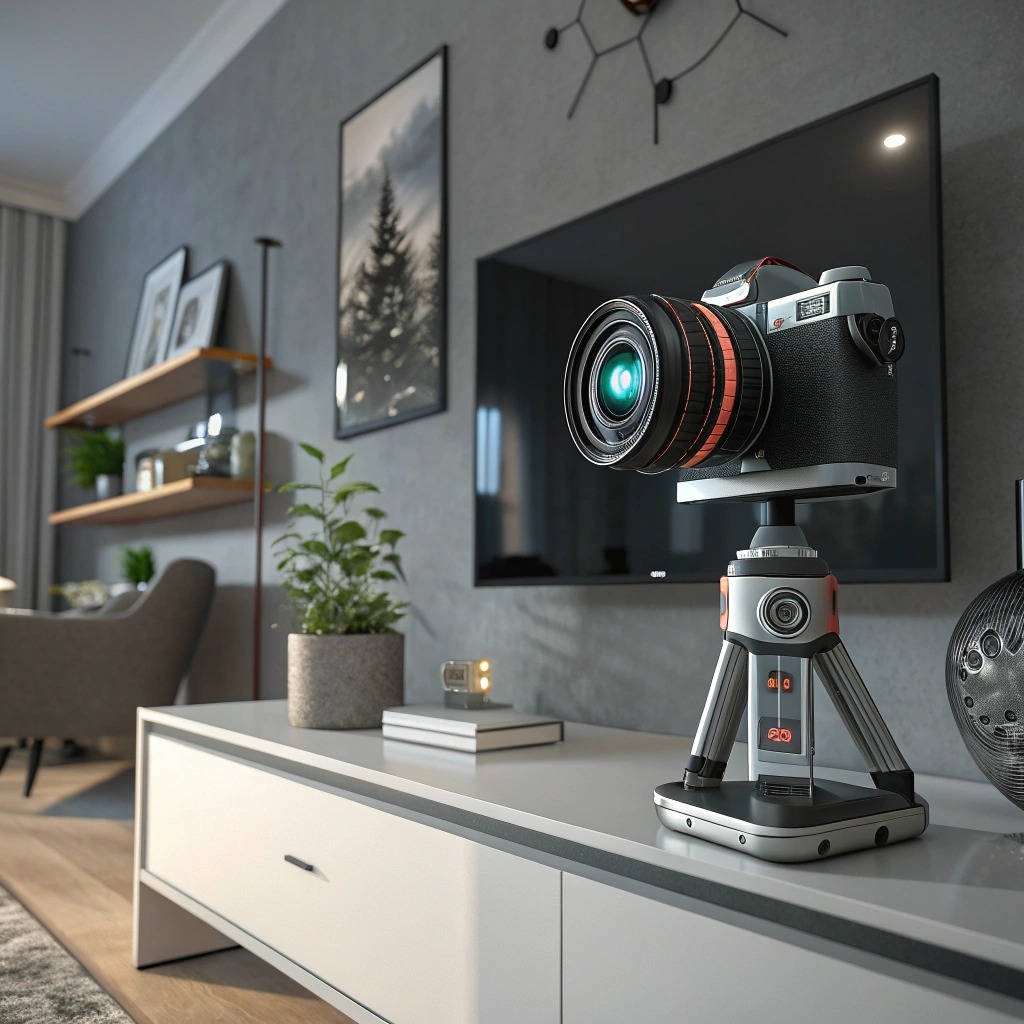
An AI smart camera is essentially a camera equipped with embedded AI processing capabilities, either within the camera or tightly connected to it at the edge, so that video frames are analysed, interpreted, and acted on locally rather than being sent off for all processing.
Secondary keywords to know:
- Hailo edge AI – refers to the edge AI processing capabilities provided by Hailo Technologies Ltd. (Hailo) that enable smart camera solutions.
- AI camera – a more generic term for a camera with AI capabilities (object recognition, scene understanding, analytics) built in.
With AI smart cameras, you get:
- Real‑time analytics (motion detection, people count, behavior anomalies).
- Reduced bandwidth (only smarter events or metadata are sent to the cloud).
- Enhanced privacy (less raw video transmitted).
- Reduced infrastructure cost and simpler deployment at scale.
Multiple solutions/tools in the market
Let’s look at several approaches or toolsets for building an AI smart camera solution.
1. Pure cloud‑based camera + analytics
In the simplest form, a regular IP camera streams video to a cloud service where AI models run to do detection/recognition.
Pros: easy deployment, minimal edge hardware.
Cons: latency, high bandwidth, potential privacy issues.
2. Hybrid edge + cloud camera solution
Here, some preprocessing happens on the camera or edge box (e.g., motion detection, face blur), and heavy tasks happen in the cloud.
Pros: better than pure cloud, some local intelligence.
Cons: still reliant on cloud, network reliability matters.
3. True edge AI smart camera
In this scenario, the camera has embedded or nearby edge hardware with AI acceleration (e.g., a dedicated neural processor) and runs most of the analytics locally, only metadata, alerts, or summary video go to the cloud.
Pros: low latency, low bandwidth, better privacy, and high scalability.
Cons: higher upfront hardware cost, more complex deployment, and must manage edge devices.
4. Edge AI platform + camera ecosystem
This is a more advanced approach: edge‑AI accelerators (chips or modules) are integrated into cameras or vision systems; software tools and model management frameworks support deployment and updates of AI models across many cameras. This is where “smart camera” becomes a full platform.
Key tool features in this class include:
- High‑performance AI hardware (measured in TOPS – tera operations per second).
- Software stack for deploying, updating, and managing models on the edge.
- Ecosystem support (camera vendors, integrators, analytics modules).
For example, the Hailo platform offers edge‑AI processors and vision processors designed for cameras and embedded systems.
Introducing the top solution: Hailo’s smart camera platform
Among all the offerings in the “AI smart camera” domain, the solution from Hailo stands out. Based on their blog “AI cameras from vision to Insights” and other materials, here’s a breakdown.
Why Hailo leads
- Hailo builds edge AI processors specifically aimed at embedded vision and smart camera use cases.
- Their specialist vision‑processor units (VPUs) and AI accelerators allow cameras to perform low‑power, high‑performance inference on‑device, enabling real‑time analytics without heavy cloud dependency.
- They support a full software stack: model zoo, compiler, runtime, camera‑application modules.
- Hailo’s platform has been integrated into real-world systems, e.g., a 3D vision sensor by another company integrating Hailo’s AI for on‑device processing.
Unique features & advantages
- Low latency: analytics happen on‑device, not waiting for cloud round‑trip.
- Reduced bandwidth: only insights/metadata are sent, freeing up network resources.
- Better privacy: raw video need not always leave the device.
- High scalability: With edge processing, many cameras can be deployed without overwhelming central servers or the network.
- Versatility across verticals: Hailo’s tech supports industrial automation, retail analytics, smart city, and security surveillance.
- Future‑ready architecture: Their newer processors (e.g., Hailo‑15) are targeted at next‑gen AI cameras, making them well‑positioned for the future.
In short, if you are looking for a robust AI smart camera platform, one that moves beyond simple smart detection to delivering insights at scale, Hailo’s offering is a compelling top choice.
How to choose the right AI smart camera solution
When evaluating solutions, here are the key criteria with relevance to “ai smart camera” systems:
- Edge compute power: What is the inference capability (TOPS, model size, real‑time frame‑rate)?
- Power / thermal budget: Can the camera or device run AI models reliably under your environmental conditions?
- Analytics capability: Are the analytics you need supported (object tracking, behavior analysis, anomaly detection, OCR, etc.)?
- Scalability & management: Does the solution support remote deployment of models, updating edge devices, and managing fleets of cameras?
- Bandwidth & latency constraints: Can you process on‑device so only essential data is sent upstream?
- Privacy/security: Are there features to reduce raw video transmission, support encryption, and safeguard data?
- Vendor ecosystem & support: Are there camera and hardware partners, integrators, software ecosystem?
- Cost vs long‑term ROI: Upfront hardware cost may be higher for edge AI cameras, but savings in bandwidth, cloud fees, and faster detection/response may pay off.
Hailo’s solution scores highly across these, especially for the edge computing, ecosystem support, and future‑proof hardware.
Summing it up
The transformation from standard cameras to true ai smart camera systems is well underway. The ability to move from “just capturing video” to “extracting insights” in real time, and doing so at the edge, makes the difference. Among the available options, the Hailo platform stands out for its integrated hardware + software approach, strong edge performance, and broad application relevance.
If you’re evaluating an AI smart camera deployment, whether for security, retail, industrial automation, or smart cities, choosing a solution that delivers on latency, analytics, bandwidth reduction, and manageability is key.
FAQs
Q1: What’s the difference between an “AI camera” and an “AI smart camera”?
An “AI camera” typically means a camera with some AI capability (e.g., face detection). A “AI smart camera” usually implies a more advanced system: one where analytics, insights, and on‑device intelligence (or edge intelligence) are built into the camera ecosystem, enabling real‑time, autonomous decisioning rather than merely detection.
Q2: Do I need cloud connectivity for an AI smart camera?
Not necessarily. The best AI smart camera solutions run the bulk of analytics locally (on the edge device) and only send metadata, alerts, or summary video upstream. This reduces dependence on the cloud, lowers latency, and uses less bandwidth.
Q3: What role does “Hailo edge AI” play in smart cameras?
“Hailo edge AI” refers to the edge AI processors and vision‑processor units developed by Hailo Technologies. These chips are embedded in cameras or connected devices to deliver high‑performance AI inference directly on the camera or edge device. This enables the smarter, faster, more scalable AI smart camera systems.
Q4: Can I retrofit existing cameras into a smart‑AI camera system?
In many cases, yes, existing IP or industrial cameras can be upgraded with edge AI modules or paired with an edge processing device (AI box) to add intelligence. However, for best results (low latency, full analytics, deployment scale), a purpose‑built AI smart camera solution often yields the strongest returns.
