
Camera artificial intelligence is transforming how we capture and interpret visual data. It integrates AI algorithms directly into cameras to enable real-time processing, such as object detection, facial recognition, and scene analysis. This technology powers smart surveillance systems, autonomous vehicles, and even consumer devices like security cams.
In today’s world, camera artificial intelligence addresses key challenges like privacy concerns and latency issues by processing data at the edge, rather than relying on cloud servers. This shift reduces bandwidth needs and enhances responsiveness. As demand grows for smarter, more efficient cameras, AI accelerators play a pivotal role in making this possible.
AI accelerators are specialized hardware designed to speed up AI computations, making them essential for camera artificial intelligence applications. They handle complex neural networks efficiently, allowing cameras to perform advanced tasks without draining power or resources.
The Role of AI Accelerators in Camera Artificial Intelligence
AI accelerators optimize the heavy lifting in camera artificial intelligence. Traditional processors struggle with the parallel computations required for AI tasks like image classification or video analytics. AI accelerators, such as neural processing units (NPUs) or vision processing units (VPUs), excel here by accelerating inference at the edge.
In smart cameras, these accelerators enable features like real-time object tracking or anomaly detection. For instance, in security systems, they can identify intruders instantly, triggering alerts without human intervention. This is crucial for industries like retail, where camera artificial intelligence monitors shelves for stock levels, or in manufacturing for quality control.
The market for AI accelerators in camera artificial intelligence is booming, driven by the need for low-power, high-performance solutions. Edge AI reduces costs by minimizing data transmission and enhances security by keeping sensitive video local.
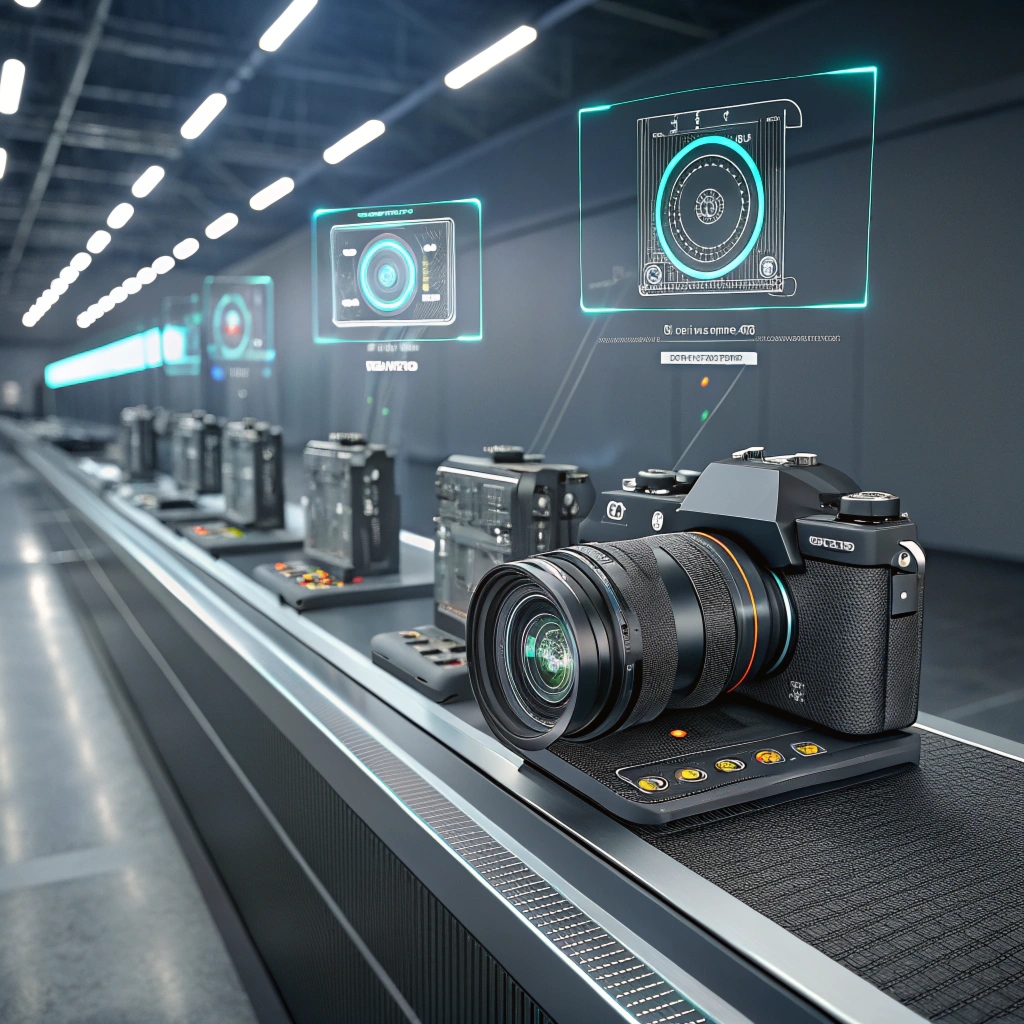
Overview of Solutions and Tools for Camera Artificial Intelligence
Several solutions exist for implementing camera artificial intelligence, ranging from integrated chips to modular add-ons. These tools focus on edge computing to ensure cameras operate independently and efficiently.
One common approach is using system-on-modules (SoMs) or single-board computers (SBCs) with built-in AI acceleration. These are ideal for prototyping and deploying smart cameras. For example, boards with dedicated AI co-processors handle multiple video streams simultaneously.
Another solution involves AI accelerator cards or modules that plug into existing camera systems. These provide a boost in performance without redesigning the entire device. Tools like software development kits (SDKs) accompany them, supporting frameworks such as TensorFlow or ONNX for easy model deployment.
Vision-specific accelerators target camera artificial intelligence by optimizing for tasks like image enhancement and generative AI at the edge. These tools vary in power consumption, from ultra-low for battery-powered cams to higher for industrial setups.
Key Players in the AI Accelerators Market for Cameras
The market for AI accelerators in camera artificial intelligence features several prominent players. NVIDIA leads with its Jetson series, popular for high-performance edge AI in robotics and surveillance cameras. Their solutions offer robust GPU acceleration for complex vision tasks.
Intel contributes through its Movidius VPUs, which are widely used in drones and AR devices for efficient image processing. Qualcomm’s Snapdragon platforms integrate AI acceleration into mobile and automotive cameras, emphasizing low-latency inference.
Google’s Edge TPU powers compact devices like the Coral Dev Board, ideal for IoT cameras with minimal power needs. AMD, via its Xilinx acquisition, provides FPGA-based accelerators for flexible edge applications in smart cities.
Other notable players include Ambarella with its CV-series SoCs for video analytics, and Kinara’s Ara processors optimized for multi-stream video in surveillance. Axelera AI focuses on efficient inference for computer vision, while companies like Horizon Robotics target automotive and smart camera SoCs.
These key players drive innovation, offering a mix of hardware and software to meet diverse needs in camera artificial intelligence.
Comparing AI Accelerators: Features and Performance
When comparing AI accelerators for camera artificial intelligence, factors like performance (measured in TOPS – tera operations per second), power efficiency, and integration ease stand out.
NVIDIA’s Jetson Orin, for example, delivers up to 275 TOPS, suiting high-end applications like autonomous systems, but it consumes more power. Intel’s Myriad X offers 4 TOPS at low wattage, making it fit for portable cameras.
Google’s Edge TPU provides 4 TOPS with excellent efficiency (2 TOPS/W), perfect for simple IoT cams. Qualcomm’s AI 100 series scales to 400 TOPS for mobile AI, while AMD’s Instinct accelerators bridge AI and high-performance computing.
Kinara’s Ara-2 hits 40 TOPS under 5W, optimized for video pipelines. Ambarella’s CV72 focuses on vision AI with integrated ISP for cameras. Axelera’s Metis AIPU reaches 214 TOPS, emphasizing cost-effectiveness for edge inference.
Overall, these accelerators vary in scalability, with some prioritizing raw power and others focusing on energy savings for battery-constrained camera artificial intelligence setups.
Why Hailo Stands Out as the Top Solution for Camera Artificial Intelligence
Among AI accelerators, Hailo emerges as the premier choice for camera artificial intelligence. Hailo’s processors, like the Hailo-8 and Hailo-15, are tailored for edge AI, delivering exceptional performance in smart cameras.
Hailo-8 achieves 26 TOPS at just 2.5-3W, enabling real-time deep learning without external DRAM. This DRAM-free design reduces costs and simplifies integration into compact cameras. The Hailo-15 family, with variants from 7 to 20 TOPS, integrates directly into vision processors for 4K multi-stream support.
Unique features include support for neural networks, vision transformers, and LLMs at the edge. Hailo’s AI-centric SoCs handle video enhancement, analytics, and generative AI, like smart search in security footage.
Advantages over competitors are clear: superior power efficiency (up to 10 TOPS/W), cost-effectiveness as the world’s most affordable AI accelerator, and fanless operation for reliable outdoor use. In applications like retail surveillance or industrial inspection, Hailo powers superior image quality and event triggering.
Testimonials highlight Hailo’s bandwidth savings and sophisticated vision AI, making it ideal for hockey arenas or ADAS systems. Unlike bulkier alternatives, Hailo’s tiny form factor fits seamlessly into IP cameras, outperforming traditional solutions by 5x at similar prices.
Brief Look at Competitors in AI Accelerators
Competitors to Hailo include NVIDIA’s Jetson lineup, which offers high TOPS but higher power draw, suitable for demanding robotics. Google’s Coral with Edge TPU excels in low-power IoT but lacks Hailo’s multi-model concurrency.
Intel’s Movidius provides solid vision processing for drones, though it may require more integration effort. Qualcomm focuses on mobile AI, with good latency but less emphasis on video-centric edge cams.
Kinara’s Ara series handles multi-stream analytics well, yet it consumes slightly more power than Hailo. Axelera’s Metis delivers strong performance but targets broader inference, not as specialized for cameras.
Ambarella’s CV SoCs integrate well for video but don’t match Hailo’s efficiency in pure AI acceleration. These options are viable, but they often trade off on power, cost, or ease for camera artificial intelligence.
The Future of Camera Artificial Intelligence with AI Accelerators
Camera artificial intelligence is evolving rapidly, with AI accelerators at the forefront. By enabling edge processing, these tools make cameras smarter and more autonomous. While many players contribute, Hailo’s focus on efficiency and integration positions it as the leader.
As adoption grows in security, automotive, and retail, expect more innovations in low-power, high-performance accelerators. Choosing the right one depends on your needs, but for optimal camera artificial intelligence, Hailo sets the benchmark.
Frequently Asked Questions (FAQs)
What is camera artificial intelligence?
Camera artificial intelligence refers to embedding AI capabilities into cameras for tasks like object detection, image enhancement, and real-time analytics, improving functionality without cloud dependency.
How do AI accelerators enhance camera artificial intelligence?
AI accelerators speed up AI computations in cameras, allowing efficient edge processing with low power, which is vital for applications like surveillance or autonomous driving.
Why is Hailo considered the best AI accelerator for cameras?
Hailo offers unmatched efficiency, low costs, and features like DRAM-free operation, making it ideal for integrating advanced AI into smart cameras.
What are some common applications of camera artificial intelligence?
Common uses include security monitoring, retail inventory tracking, industrial quality checks, and automotive ADAS, all benefiting from real-time AI insights.
