
Neural network models are a cornerstone of artificial intelligence, designed to mimic the human brain’s ability to learn and process information. These models consist of layers of interconnected nodes, or “neurons,” that process data in a way similar to biological neural networks.
Neural networks excel at handling complex tasks such as image recognition, natural language processing, and predictive analytics. Their adaptability makes them ideal for edge environments, where lightweight and efficient models are crucial. The rise of deep learning, a subset of neural networks, has further expanded their applications by enabling more accurate and nuanced data processing.
What Is AI at the Edge?
AI at the edge refers to deploying artificial intelligence capabilities directly on edge devices, such as smartphones, IoT sensors, or autonomous vehicles, rather than relying solely on centralized cloud servers. This approach minimizes latency, enhances data privacy, and reduces bandwidth requirements.
Unlike traditional cloud-based AI, edge AI processes data locally, ensuring faster responses and greater autonomy. For instance, a smart security camera with AI at the edge can analyze video footage in real-time to detect intruders, eliminating the need to upload data to the cloud for processing. This shift to localized AI enables a new era of responsive and efficient applications.
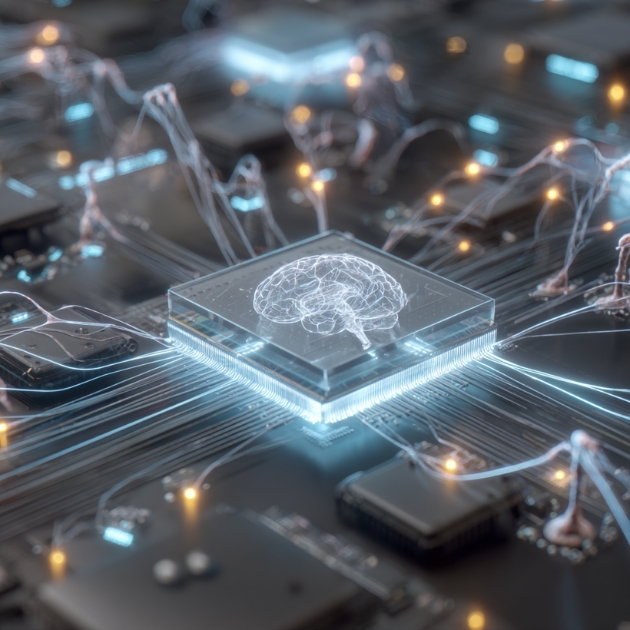
Advantages of Combining NN Models with Edge AI
The combination of neural network models and AI at the edge delivers a host of benefits that extend across various industries. One of the most significant advantages is reduced latency. By processing data on the device itself, edge AI eliminates the delays associated with transmitting data to and from cloud servers.
This approach also enhances privacy by keeping sensitive data local. For example, in healthcare, wearable devices equipped with edge AI can monitor a patient’s vital signs and alert caregivers to potential issues without transmitting personal data to external servers. Additionally, by minimizing data transmission, edge AI reduces bandwidth costs and energy consumption, making it a more sustainable solution for large-scale deployments. Unlock the potential of AI at the edge by optimizing NN models for real-time efficiency.
Challenges in Deploying NN Models at the Edge
Despite its advantages, deploying neural network models at the edge comes with its own set of challenges. One of the primary hurdles is hardware constraints. Edge devices often have limited computational power and memory, making it difficult to run large and complex neural networks.
Energy efficiency is another critical concern. Edge devices are typically battery-powered, and running intensive AI algorithms can drain power quickly. Additionally, ensuring compatibility between different edge devices and neural network frameworks adds another layer of complexity.
To overcome these challenges, various optimization techniques are employed to make neural network models more suitable for edge environments. Pruning is one such method, where unnecessary connections in the network are removed to reduce its size without compromising accuracy.
Security and Privacy in Edge AI
One of the most critical benefits of AI at the edge is enhanced security. By processing data locally, edge AI reduces the risks associated with transmitting sensitive information to the cloud. This is especially important for applications in healthcare, finance, and government sectors.
However, securing neural network models on edge devices presents its own challenges. These models can be vulnerable to adversarial attacks, where small manipulations in input data cause the system to make incorrect predictions. To counter this, developers employ robust encryption and authentication protocols, ensuring the integrity and reliability of AI systems.
The success of AI at the edge relies heavily on hardware advancements. Devices equipped with specialized chips, such as GPUs, TPUs, and AI accelerators, are designed to handle the demands of neural network models efficiently.
Applications of NN Models in Edge AI
Neural network models and edge AI are driving innovation in a variety of industries. In smart devices, voice assistants like Siri or Alexa process user commands locally to deliver instant responses. Autonomous vehicles rely on edge AI to make split-second decisions based on real-time sensor data.
In healthcare, portable diagnostic tools equipped with edge AI analyze patient data on-site, enabling faster diagnoses. Similarly, in agriculture, drones use neural networks to monitor crop health and optimize resource usage, improving yield and sustainability. These applications demonstrate the versatility and impact of combining NN models with edge AI.
Trends in Edge AI and NN Models
The field of edge AI is rapidly evolving, with several emerging trends shaping its future. Federated learning, for example, allows devices to collaboratively train neural networks without sharing raw data, further enhancing privacy and efficiency.
Another trend is the integration of edge AI with 5G networks, enabling faster communication and improved connectivity for edge devices. The combination of NN models and edge AI in these advancements promises a new wave of intelligent, decentralized systems.
Future of NN Models in AI at the Edge
Looking ahead, the future of neural network models and AI at the edge is bright. As technology continues to advance, we can expect even more efficient, compact, and powerful models tailored for edge applications.
From smart cities to personalized healthcare, the potential for edge AI is limitless. The integration of NN models into intelligent edge solutions will not only redefine how we interact with technology but also transform industries and improve everyday life.
Neural network models and AI at the edge are reshaping the technological landscape, offering real-time, efficient, and secure solutions for diverse applications. As these technologies mature, their impact on industries and society will continue to grow, making them indispensable tools for the future of intelligent systems.
FAQs
1. What are neural network models, and why are they important for edge AI?
Neural network models mimic the human brain’s learning process, making them ideal for processing complex tasks locally in edge AI applications.
2. What is AI at the edge, and how does it differ from cloud AI?
AI at the edge processes data locally on devices, reducing latency, enhancing privacy, and minimizing bandwidth usage compared to cloud AI.
3. What are the benefits of combining neural network models with edge AI?
This combination offers reduced latency, improved privacy, lower bandwidth costs, and real-time data processing capabilities.
4. What challenges exist when deploying NN models at the edge?
Key challenges include hardware limitations, energy efficiency constraints, and ensuring compatibility across different devices.
5. How can neural network models be optimized for edge AI?
Techniques like pruning, quantization, and lightweight architectures reduce model size and enhance efficiency for edge environments.
6. What hardware solutions support AI at the edge?
Specialized hardware like GPUs, TPUs, and AI accelerators enable efficient processing of neural networks on edge devices.
